Spring 2026 Lecture 

"Microstructure Development of In Situ, Melt Processed Al-TiC Nanocomposites for Improved Properties"

March 31, 2026
Lecture from 3-5 p.m.
Resnik Lecture Hall
1202 Glenn L. Martin Hall 
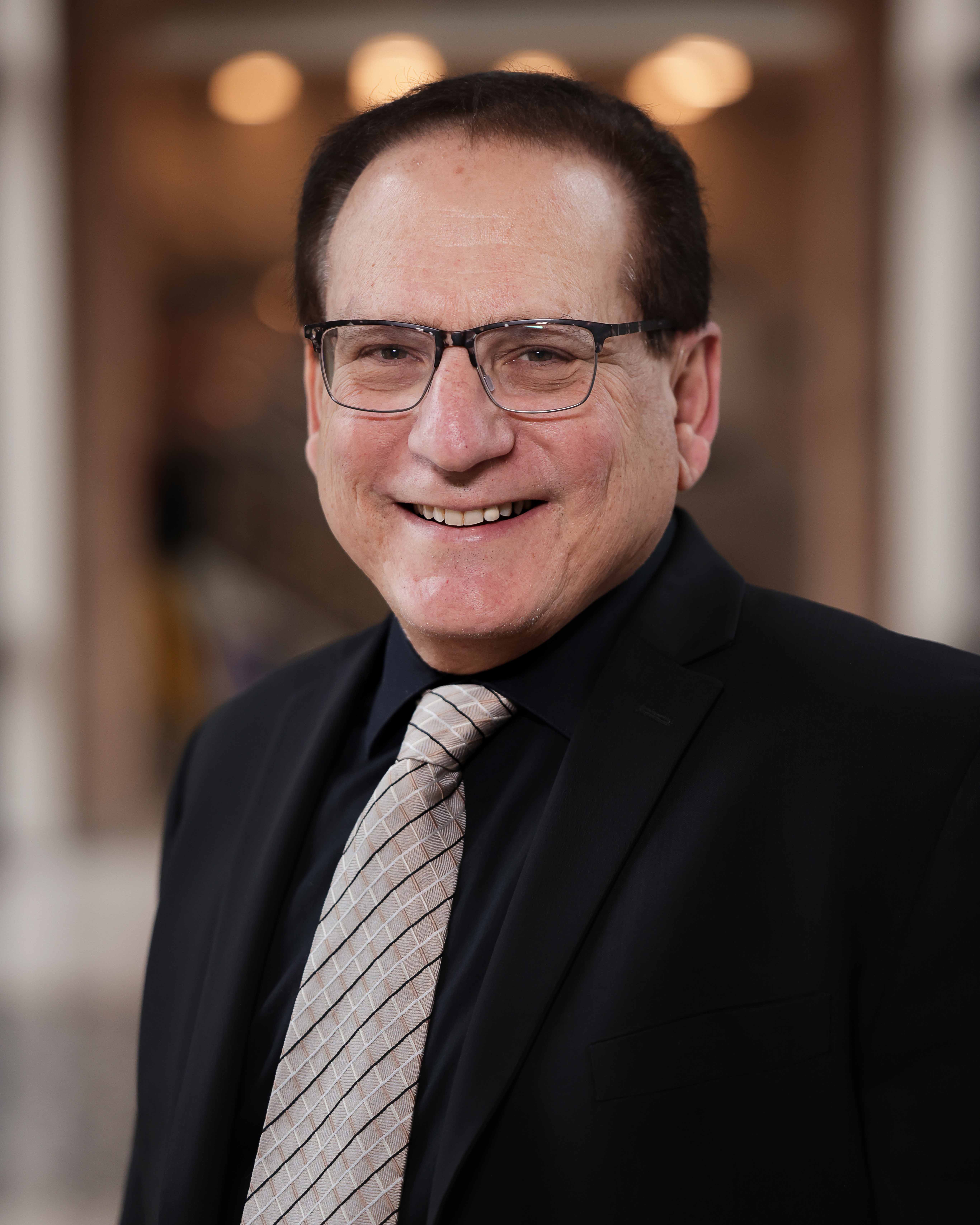
Alan Taub
Robert H. Lurie Professor of Engineering
University of Michigan
RSVP

Abstract: Aluminum alloys have been employed extensively for structural applications owing to their high strength-to-weight ratio. However, these materials have limited stability at elevated temperature. The incorporation of nanoscale particles in the Al matrix, termed metal matrix nanocomposites (MMNCs), is a promising approach to improved ambient and elevated temperature mechanical properties, while still retaining the lightweight benefits of Al. In situ processing methods, where particles are created directly in the melt via direct reaction, have been demonstrated to exhibit improved particle/matrix interface stability and easier incorporation within the matrix. However, the ability to reliably control critical mechanical property-dependent particle characteristics (i.e., particle size, volume fraction, and dispersion) remains a barrier to large-scale processing. This talk will describe a multi-modal, multi-scale investigation to analyze the formation mechanisms, morphology, and microstructure of Al-TiC metal matrix composites processed by different in situ processes. Directional solidification experiments were used to observe particle pushing during solidification, resulting in bands of particle-rich regions. It was also found that applying low electrical currents during solidification results in refinement of the microstructure. By combining synchrotron-based X-ray nanotomography (TXM) with scanning and transmission electron microscopy, we visualize in over five orders-of-magnitude of length-scale the TiC nanoparticles and Al3Ti intermetallics. The results offer general guidelines for the rational synthesis and processing of Al-MMNCs.

Bio: A member of the University of Michigan faculty since 2012, Alan Taub conducts research in advanced materials and processing. In 2022, he was appointed the first director of the newly-launched University of Michigan Electric Vehicle Center. He also founded and served as the first director of the Michigan Materials Research Institute.

Prior to his academic career, Taub was vice president of General Motors (GM) Global Research & Development, leading GM’s advanced technical work activity, seven science laboratories around the world, including the Israel Advanced Technology Center, and seven global science offices. He previously spent 15 years in research and development at General Electric (GE), where he earned 25 patents.

Taub received his bachelor’s degree in materials engineering from Brown University, going on to earn master’s and Ph.D. degrees in applied physics from Harvard University. He was elected to membership in the National Academy of Engineering in 2006. The author of more than 80 papers, Taub's numerous honors and awards include the 2020 TMS Application to Practice Award and the 2011 Acta Materialia Materials & Society Award.

Previous Lecture:

Reaching for the Sky — Materials in Extreme Environments 

April 16, 2025
Watch on YouTube
Stanley R. Zupnik Forum
A. James Clark Hall
Tresa M. Pollock
Alcoa Distinguished Professor of Materials
University of California Santa Barbara
Event Contact: Sherri Tatum statum12@umd.edu

Abstract: Aircraft, spacecraft and rockets connect people and goods across vast distances, enable global satellite communication, facilitate fundamental scientific discoveries and empower exploration of the solar system and beyond. The operating environments of these advanced systems require materials that can tolerate extremes of temperature, loading and surrounding chemical environment. Designing materials to survive in these environments has traditionally been a slow, expensive process that requires understanding and control down to the atomic level as well as a detailed understanding of potential failure modes. This motivates new experimental and computational tools that can accelerate this process and aid in materials discovery. Examples of new tools will be discussed, including the new TriBeam tomography platform developed at UCSB for rapid acquisition of multimodal materials data. New insights on rare features of polycrystals that result in fracture and emerging new materials will be discussed.    

Bio: Tresa Pollock is the Alcoa Distinguished Professor of Materials at the University of California, Santa Barbara. Pollock’s research focuses on the mechanical and environmental performance of materials in extreme environments, unique high temperature materials processing paths, ultrafast laser-material interactions, alloy design and 3-D materials characterization. Pollock graduated with a B.S. from Purdue University in 1984, and a Ph.D. from MIT in 1989. She was employed at General Electric Aircraft Engines from 1989 to 1991, where she conducted research and development on high temperature alloys for aircraft turbine engines and co-developed the single crystal alloy René N6 (now in service). Pollock was a professor in the Department of Materials Science and Engineering at Carnegie Mellon University from 1991 to 1999 and the University of Michigan from 2000-2010.  Professor Pollock was elected to the U.S. National Academy of Engineering in 2005, the German Academy of Sciences Leopoldina in 2015, and is a DOD Vannevar Bush Fellow and Fellow of TMS and ASM International. She has served as Editor in Chief of the Metallurgical and Materials Transactions family of journals, was the 2005-2006 President of the Minerals, Metals and Materials Society and served as Materials Department Chair (2011–2017), Associate Dean of Engineering (2018–2021) and Interim Dean of the College of Engineering at UCSB (2021–2023). 


Top