Requirements for the MSE major include thorough preparation in mathematics, chemistry, physics, and engineering science as well as the required university general education requirements. All students will be required to select an area of specialization, an upper-class science elective, and two technical electives. A minimum of 122 credits is required for a bachelor's degree.

In this topical area, they will take five upper level (junior/senior) classes, of which at least four must be ENMA classes. Specialization electives are intended to help students find their area of interest in MSE; they are not intended to limit student choices. Students may switch between specialization areas any time with advisor approval. Classes offered by other departments with cross listed ENMA sections such as PHYS 499M (ENMA 489X): Physics, Material Chemistry and Device Applications at the Nanoscale and CHBE 473 (ENMA 499C): Electrochemical Energy Engineering may be used as specialization electives with advisor approval.

The identified specializations are Materials Science, Soft Materials and Biomaterials, Materials for Applications, and Materials for Energy. With their advisor’s approval, students may design a specialization area to meet individual career and academic goals. The five classes may be ENMA electives or other upper level engineering classes. The choice and sequence of specialization electives is discussed with, and approved by, the student’s academic advisor. The specialization electives must make sense as a package in terms of the individual student’s academic and career goals. The choice of specialization area allows the student significant flexibility in choosing her or his envisioned career path. Representative elective classes, which may be taken as specialization electives, include:

Gives students a chance to explore more fundamental aspects of materials science involving different types of materials.

  • ENMA 400: Introduction to Atomistic Modeling in Materials
  • ENMA 410: Materials for Energy I
  • ENMA 411: Materials for Energy II
  • ENMA 412: Fundamentals of Solar Cells
  • ENMA 414: Introduction to Solid State Ionics
  • ENMA 421: Design of Composites
  • ENMA 422: Radiation Effects
  • ENMA 425: Introduction to Biomaterials
  • ENMA 426: Reliability of Materials
  • ENMA 436: Intro to Quantum Materials and Devices
  • ENMA 440: Plasma Processing of Materials
  • ENMA 443: Introduction to Photonic Materials, Devices and Reliability
  • ENMA 445: Liquid Crystals and Other Monomeric Soft Matter Materials
  • ENMA 462: Smart Materials
  • ENMA 463: Macroprocessing
  • ENMA 464: Environmental Effects on Engineering Materials
  • ENMA 466: Advanced Materials Fabrication Laboratory
  • ENMA 473: Engineering Using High Strength Metals and Alloys
  • ENMA 475: Diffraction Techniques in Materials Science
  • ENMA 481: Introduction to Electronic and Optical Materials
  • ENMA 489C: Electrochemical Energy Engineering
  • ENMA 495: Polymeric Engineering Materials
  • ENMA 496: Processing and Engineering of Polymers
  • ENMA 499: Laboratory Project

Focuses on understanding the structure and properties of soft structured matter and its building blocks, including polymers, colloids, and liquid crystals. Gives students a chance to explore the development and application of engineered materials for applications in human and other biological systems.

  • ENMA 400: Introduction to Atomistic Modeling in Materials
  • ENMA 421: Design of Composites
  • ENMA 422: Radiation Effects
  • ENMA 425: Introduction to Biomaterials
  • ENMA 426: Reliability of Materials
  • ENMA 445: Liquid Crystals and Other Monomeric Soft Matter Materials
  • ENMA 463: Macroprocessing
  • ENMA 464: Environmental Effects on Engineering Materials
  • ENMA 472: Additive Manufacturing of Materials
  • ENMA 473: Engineering Using High Strength Metals and Alloys
  • ENMA 475: Diffraction Techniques in Materials Science
  • ENMA 495: Polymeric Engineering Materials
  • ENMA 496: Processing and Engineering of Polymers
  • ENMA 499: Laboratory Project

Focuses on understanding how materials are used in aplications and how their behavior can be tailored for various applications.

  • ENMA 400: Introduction to Atomistic Modeling in Materials
  • ENMA 410: Materials for Energy I
  • ENMA 414: Introduction to Solid State Ionics
  • ENMA 421: Composite Materials
  • ENMA 422: Radiation Effects
  • ENMA 426: Reliability of Materials
  • ENMA 436: Intro to Quantum Materials and Devices
  • ENMA 440: Plasma Processing of Materials
  • ENMA 443: Introduction to Photonic Materials, Devices and Reliability
  • ENMA 462: Smart Materials 
  • ENMA 463: Macroprocessing
  • ENMA 464: Environmental Effects on Materials
  • ENMA 466: Advanced Materials Fabrication Laboratory
  • ENMA 472: Additive Manufacturing of Materials
  • ENMA 473: Engineering Using High Strength Metals and Alloys
  • ENMA 476: Manufacturing: Materials Design and Systems Integration
  • ENMA 481: Introduction to Electronic and Optical Materials
  • ENMA 489C: Selected Topics in Engineering Materials; Continuum Modeling of Materials
  • ENMA 495: Polymeric Engineering Materials I
  • ENMA 496: Processing and Engineering of Polymers
  • ENMA 499: Laboratory Project

Focuses on the processig and applications of materials used to generate, transport, and store energy.

  • ENMA 400: Introduction to Atomistic Modeling in Materials
  • ENMA 410: Materials for Energy I
  • ENMA 411: Materials for Energy II
  • ENMA 412: Fundamentals of Solar Cells
  • ENMA 414: Introduction to Solid State Ionics
  • ENMA 422: Radiation Effects
  • ENMA 426: Reliability of Materials
  • ENMA 436: Intro to Quantum Materials and Devices
  • ENMA 440: Plasma Processing of Materials
  • ENMA 443: Introduction to Photonic Materials, Devices and Reliability
  • ENMA 462: Smart Materials
  • ENMA 463: Macroprocessing
  • ENMA 464: Environmental Effects on Materials
  • ENMA 466: Advanced Materials Fabrication Laboratory
  • ENMA 472: Additive Manufacturing of Materials
  • ENMA 489C: Electrochemical Energy Engineering
  • ENMA 495: Polymeric Engineering Materials
  • ENMA 499: Laboratory Project


MSE Students Are Driven by Research and Innovation
 

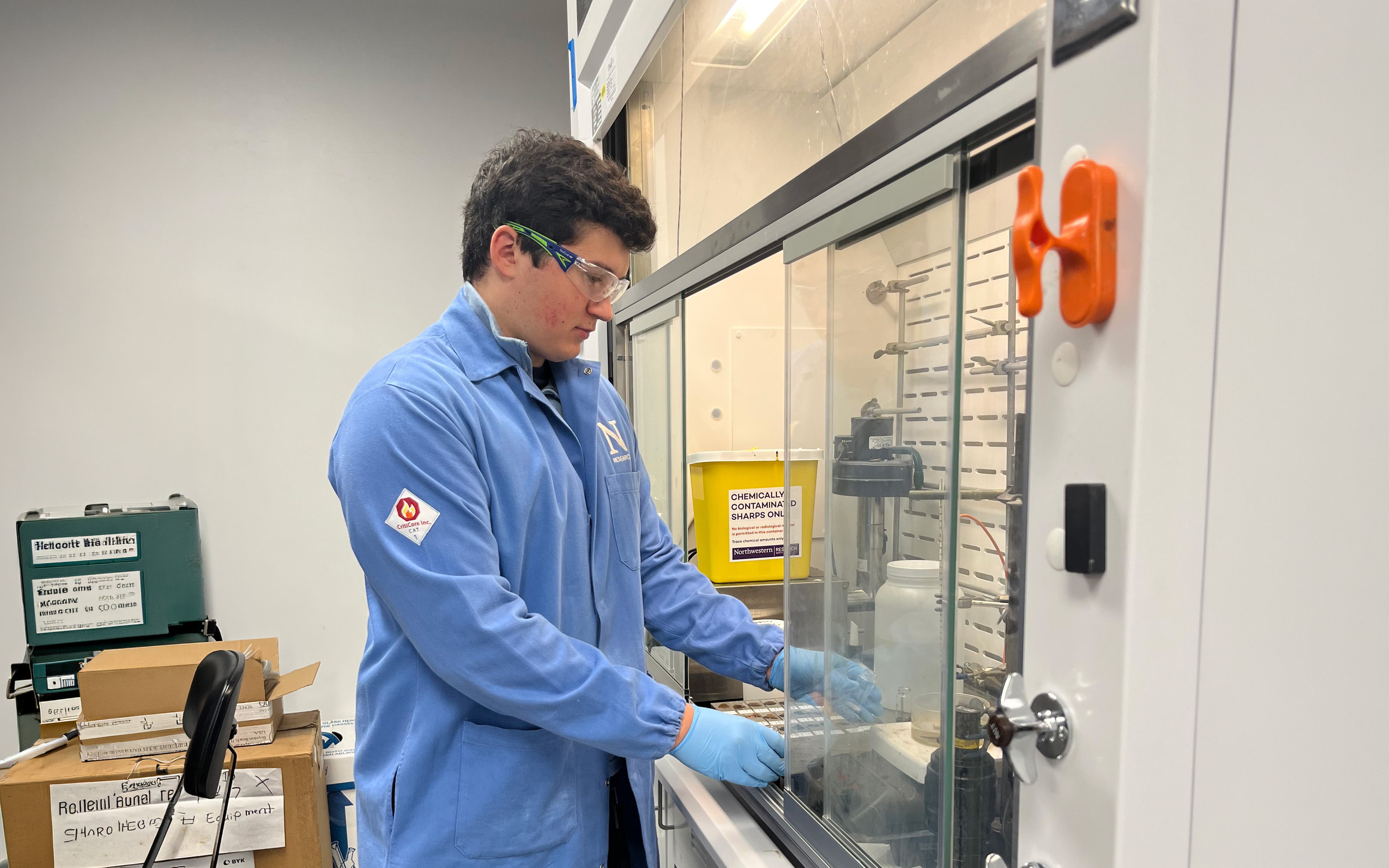
Student Frank Rhodes in lab.

Frank Rhodes '27 setting up an oil bath apparatus for in-situ silver nanoparticle synthesis in a polymer matrix. 

In the Windy City, Frank Rhodes '27 Gets Acquainted with X-Ray Diffraction, Dynamic Light Scattering & Other Lab Techniques

Frank Rhodes, pictured above, spent the Summer of 2026 in Evanston, Illinois participating in Northwestern University's MRSEC Research Experience for Undergraduates (REU) program. This program is funded by the National Science Foundation (NSF), and he applied to pursue opportunities researching soft, polymeric materials. His project focused on forming in-situ silver nanoparticles in disulfide polymer matrices and characterizing their impact on material properties. This builds upon the wider topic of dynamic polymer networks which have unique properties for self-healing, smart adhesives, and eco-friendly recycling. Understanding the impact of synthesizing nanoparticles inside the polymer can lead to developments in improved strength or easier recycling for these material systems. Using Northwestern's facilities, he has become more familiar with lab techniques such as x-ray diffraction, dynamic light scattering, and dynamic mechanical analysis, and has designed his own procedures to test hypotheses and probe the nanoparticles' effect. He learned a lot about polymer science from his REU mentor and has been able to explore more post-graduate options in MSE. And of course, he had a great time exploring the Chicago area (especially the Field Museum and Shedd Aquarium) and getting to know his peers in the program from other universities.

Want to learn more about what the MSE major offers? Check out our Student Stories below.


Top